
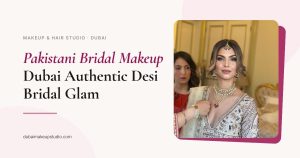
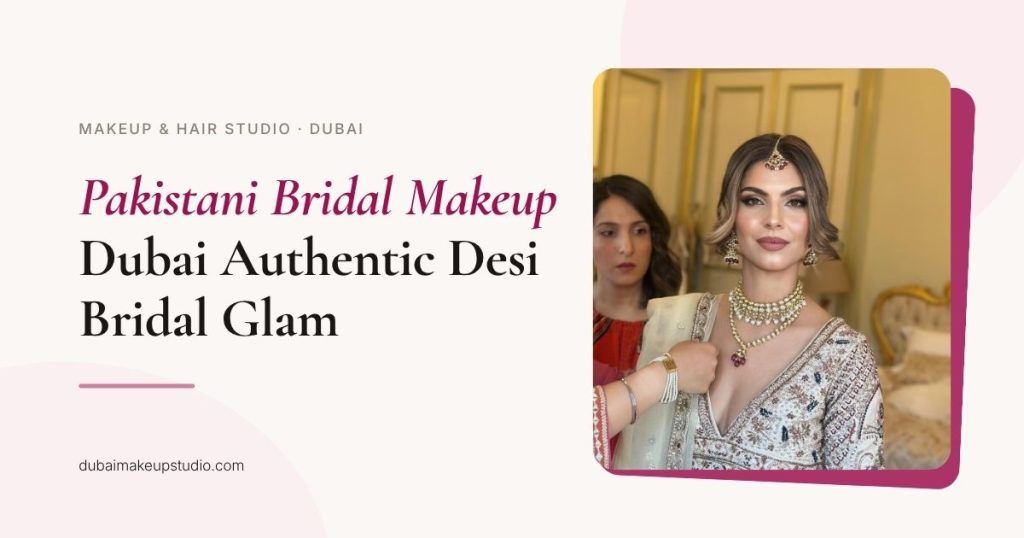
Pakistani Bridal Makeup Dubai: Your Complete 2025 Guide to Desi Bridal Glam
Pakistani weddings in Dubai are a celebration of layered beauty, tradition, and seriously high standards. From the intimate Nikah ceremony to the main Baraat and the grand Walima reception, each event calls for a completely different look. The makeup has to photograph beautifully under warm banquet lighting, hold for eight or more hours, and honour the traditions your family expects, all at once.
Finding a makeup artist who genuinely understands Pakistani bridal aesthetics, and not just “South Asian” in a vague catch-all sense, makes a significant difference to how you look and feel on each of those days. This guide covers every ceremony, every look, and every question brides typically have before they book.
What Makes Pakistani Bridal Makeup Different
Pakistani bridal makeup is not a single style. It sits at a fascinating crossroads of Mughal-era grandeur, contemporary editorial trends, and regional variation across Punjab, Sindh, Karachi, and Lahore-influenced aesthetics. A few things set it apart from other South Asian or Arabic bridal traditions:
- Heavy, defined eyes: Kohl-rimmed, smoky, or dramatically extended liner is standard across almost every ceremony. The eyes are usually the focal point.
- Rich, warm skin prep: Pakistani bridal base work emphasises a luminous, warm-toned finish rather than a matte or cool-toned one. Radiance without greasiness is the goal.
- Bold lip colour on the Baraat: Deep reds, berry plums, and brick nudes are all culturally rooted in the Baraat look, though modern brides are increasingly choosing a softer lip with a heavier eye.
- Contouring that works with dupatta and jewellery framing: Heavy statement jewellery and a dupatta draped over the head changes the visual frame of the face, so contouring technique has to account for that.
- Multi-day stamina: Pakistani weddings routinely span three to five days. Every look needs to be distinct but still feel cohesive as a bridal journey.
An artist who has only ever done Western bridal or Arabic Khaleeji makeup may technically be skilled, but they will not instinctively know these nuances. Experience with Pakistani bridal makeup specifically is something worth asking about directly when you enquire.
The Pakistani Wedding Ceremony Breakdown and What Each Look Requires
Dholki / Pre-Wedding Celebrations
Dholki events are energetic, colourful, and photographed heavily on phones rather than by a professional. Vibrant colours, a playful eye look, and glowing skin suit this occasion. Think bright eyeshadow, a fresh dewy base, and a fun lip. This is actually a great opportunity to road-test a look with your artist before the main events.
Mehndi Ceremony
Mehndi is almost always a yellow and green affair, with brides traditionally wearing bright, festive colours. The makeup should be bold enough to hold its own against vivid fabric but still soft enough to feel youthful and joyful. A warm terracotta eye, glowing skin, and a coral or orange-toned lip are classic Mehndi choices. Some modern brides prefer a more editorial approach with graphic liner or bold blush placement.
Nikah Ceremony
The Nikah is the most sacred ceremony, and many Pakistani brides prefer a softer, more refined look for it. Soft smoky eyes, a rosy flush, and a medium-depth lip feel appropriate without being understated. The look should feel bridal and intentional, not casual, but the formality comes through elegance rather than heaviness.
Baraat (The Main Wedding Day)
This is the look most people picture when they think of Pakistani bridal makeup. Full coverage base with a flawless finish, deep-set defined eyes, architectural brows, sculpted contour, and a statement lip. The look has to last through the ceremony, the rukhsati, and often the early hours of the Walima the following day. Setting spray, professional products, and a skilled hand with layering make the difference between makeup that looks perfect at hour one and makeup that still looks perfect at hour ten.
Walima Reception
The groom’s family hosts the Walima, and the bride traditionally appears in lighter, often white or pastel, attire. The makeup shifts accordingly: softer, more luminous, brighter, sometimes described as a “fresh bride” look. It should feel different from the Baraat but still clearly bridal. A soft pink or nude lip, a polished eye, and dewy skin work beautifully here.
Mobile Pakistani Bridal Makeup in Dubai: Why It Matters
Pakistani weddings in Dubai are often family affairs spanning multiple venues, hotels, and private residences. On a Baraat morning, the last thing a bride needs is to sit in Dubai traffic trying to reach a salon. Having your artist come to your hotel suite, villa, or home removes an enormous source of stress from an already full day.
Mobile makeup services in Dubai allow the artist to arrive at your location, set up their full kit, and work in the environment where you are already getting ready with your family around you. For Pakistani brides specifically, this also means the artist can accommodate dupatta draping, jewellery placement, and last-minute touch-ups without rushing you in and out of a salon chair.
It is worth noting that mobile artists often carry more product variety than a salon station allows, because their kit is built for versatility across different skin tones and looks, rather than being stocked for an average walk-in client. For Pakistani brides with deeper or olive skin tones, product selection matters significantly. A well-stocked artist will have foundation ranges that do not pull grey or ashy on warm-undertoned skin.
Skin Tones and Foundation Matching for Pakistani Brides
Pakistani skin tones span a wide spectrum, from very fair with pink undertones in some northern families to deep olive and warm brown in others. The common thread across almost all Pakistani complexions is a warm or neutral undertone, which means foundations with cool or pink bases tend to look unnatural and grey in photographs.
A skilled artist will:
- Match foundation to the neck and chest, not just the face
- Use a shade that photographs true to your natural skin, not lighter
- Layer skincare underneath to ensure the base does not look cakey on camera
- Set with the right powder depth so there is no flashback in photos
HD photography and professional video are almost universal at Pakistani weddings in Dubai. Flashback, where too much silica-heavy setting powder makes the face appear white and washed out in photos, is a real concern. An experienced Pakistani bridal makeup artist will know exactly which setting products to use and which to avoid.
For more on how Dubai’s top bridal artists approach foundation and photography readiness, the guide to the best bridal makeup artists in Dubai for 2026 covers what to look for in a portfolio and how to assess a trial.
What to Look for in a Pakistani Bridal Makeup Artist in Dubai
The Dubai beauty market is large and competitive. There are hundreds of makeup artists operating across the city, but genuine expertise in Pakistani bridal looks is more specific. Here is what to look for:
- A portfolio with actual Pakistani brides: Ask to see Baraat and Mehndi looks specifically. General “South Asian bridal” work does not always translate across cultural styles.
- Experience with multi-day bookings: An artist who has done Mehndi, Baraat, and Walima for the same bride understands the demands of the full wedding arc.
- Honest consultation approach: A good artist will ask about your outfit colours, jewellery weight, venue lighting, and photography style before suggesting anything. One who immediately pitches a single look without asking questions is a red flag.
- Products suited for warm and olive tones: Ask what foundation brands they carry. Artists who work regularly with South Asian clients will have ranges like NARS, Charlotte Tilbury, Make Up For Ever, and MAC in warm-toned depths.
- Trial availability: A bridal makeup trial is non-negotiable for a Pakistani wedding. With multiple looks across multiple days, you want to test at least the Baraat look and ideally the Mehndi look before the wedding arrives. Read more about how to approach this in the bridal makeup trial guide for Dubai brides.
2025 Pakistani Bridal Makeup Trends in Dubai
Pakistani bridal aesthetics are evolving fast, especially among Dubai-based brides who are exposed to both Western editorial influences and traditional expectations from family. Here is what is trending for Pakistani brides in Dubai right now:
Soft Glam on the Nikah and Walima
Brides are deliberately choosing lighter, more editorial looks for their lower-key ceremonies, saving the full drama for Baraat. Feathered brows, soft peachy nudes, and glass-skin finishes are popular for Nikah looks in particular.
Graphic and Cut-Crease Eyes
The cut-crease has been a Pakistani bridal staple for years, but 2025 versions are sharper and more graphic, often incorporating a subtle shimmer on the mobile lid with a matte deepened crease. This photographs beautifully and holds the structure even under warm venue lighting.
Bronzed, Sculpted Skin
The “expensive skin” trend, a seamless blend of base, bronzer, and highlighter that makes skin look naturally luminous rather than made-up, is very popular among younger Pakistani brides. It works especially well on warm and olive undertones.
Deep Berry and Brown-Red Lips for Baraat
Classic deep reds are still dominant on Baraat day, but a brown-tinted red or deep berry is having a moment. It photographs warmer and feels more modern without departing from tradition.
Jewel-Toned Eyes for Mehndi
Emerald, sapphire, and rust-orange eyeshadow are increasingly popular as Mehndi looks move away from the predictable golden-brown smoky eye. These bold tones pair brilliantly with the bright, saturated fabric colours typical of Mehndi outfits.
For the full picture on what is trending in Dubai bridal beauty this year, see the comprehensive bridal hair and makeup trends Dubai 2025 guide.
Pakistani Bridal Makeup vs. Arabic Bridal Makeup in Dubai
Both styles are dramatic and heavily eye-focused, so they are sometimes confused or conflated. The differences matter, though:
- Eye shape emphasis: Arabic bridal makeup typically uses extended liner to elongate the eye and create an almond shape with a very specific flick. Pakistani bridal eyes tend to be smokier, softer at the edges, and deeper in the crease, with a kohl-heavy waterline.
- Skin finish: Arabic Khaleeji bridal looks often feature a porcelain, highly matte finish. Pakistani bridal base work sits closer to luminous and warm, with a satiny rather than flat finish.
- Lip: Arabic bridal lips are often nude or pale pink, keeping all drama in the eyes. Pakistani Baraat lips are traditionally deep and saturated.
- Jewellery framing: Pakistani brides typically wear heavier, more elaborate jewellery that changes how the face is framed. A good artist will contour and highlight with this framing in mind.
If you are curious how these two styles compare in more detail, the guide to Arabic bridal makeup in Dubai breaks down the Khaleeji look in full.
How Much Does Pakistani Bridal Makeup Cost in Dubai?
Pricing for Pakistani bridal makeup in Dubai varies based on whether you are booking a single-ceremony look or a full multi-day package, whether the artist is mobile or studio-based, and the artist’s experience level. As a general reference point:
- A single ceremony look from an experienced freelance artist typically starts from AED 800 to AED 1,200
- Full multi-day Pakistani bridal packages covering Mehndi, Baraat, and Walima are usually priced between AED 2,500 and AED 5,000 or more for premium artists
- A standalone bridal trial session is usually charged separately and is strongly recommended before committing to a package
For a detailed breakdown of what drives bridal makeup pricing in Dubai and how to compare quotes fairly, the bridal makeup cost Dubai 2025 guide is worth reading before you start asking for quotes.
Booking Timeline for Pakistani Brides in Dubai
Pakistani wedding seasons in Dubai tend to cluster around the cooler months from October through March, when outdoor ceremonies and garden venues are practical. This means popular artists fill up fast during this window.
A realistic booking timeline looks like this:
- 6 to 12 months before the wedding: Begin researching artists, reviewing portfolios for Pakistani bridal work specifically, and shortlisting two or three candidates.
- 4 to 6 months out: Book your trials. Confirm your shortlisted artist and secure your dates with a deposit.
- 2 to 3 months out: Finalise all ceremony dates and times, share outfit and jewellery details with your artist, and confirm call times for each day.
- 4 to 6 weeks out: Run a final check on products used in your trial to ensure no skin reactions. Do not introduce new skincare during this period.
For a full walkthrough of how to choose and book the right person for your wedding, the guide on how to find the best bridal makeup artist in Dubai covers every step of the process in practical detail.
Pakistani Destination Brides Flying into Dubai
Dubai is increasingly a wedding destination for Pakistani families, with couples choosing the city for its luxury venues, accessible international flights, and spectacular backdrops. If you are a Pakistani bride who lives outside the UAE and is marrying in Dubai, a mobile artist is essentially your only practical option, since you will not have weeks to visit a local salon for a trial in advance.
The good news is that Dubai’s mobile bridal artists are experienced with exactly this scenario. Trials can be scheduled during a pre-wedding site visit, and experienced artists are familiar with working across hotels and private venue locations. Read more about how this works in the destination wedding makeup artist Dubai guide.
Frequently Asked Questions About Pakistani Bridal Makeup in Dubai
How many looks should I plan for a Pakistani wedding in Dubai?
Most Pakistani weddings in Dubai involve at minimum three distinct looks: Mehndi, Baraat, and Walima. If there is a Dholki or Nikkah as a separate event, that can mean four or five looks total. You do not need to book the same artist for every ceremony, but continuity is easier to manage and gives a more coherent feel across your wedding photography. Discuss the full schedule with your artist upfront so they can price accordingly and block out their calendar.
Can a makeup artist come to my hotel room on Baraat morning in Dubai?
Yes, and this is actually the most common arrangement for Pakistani brides in Dubai. Mobile artists travel to your hotel, villa, or venue with their full kit. You should confirm this when booking and provide the address, parking logistics, and your required call time. Most mobile artists in Dubai are fully equipped for this and will often arrive an hour before they start to set up properly.
Should I bring my dupatta and jewellery to my makeup trial?
Absolutely, especially your Baraat pieces. The dupatta frames your face significantly and changes how heavy or light the makeup looks. Your Baraat jewellery, especially maang tikka and jhumkas, will also affect where highlights and contour need to sit. A good artist will ask you to bring these; if they do not, bring them anyway.
What is the difference between Pakistani bridal makeup and Indian bridal makeup?
The two styles share DNA but diverge in several ways. Pakistani bridal makeup tends to favour smokier, kohl-heavy eyes and a slightly more muted skin finish, while Indian bridal looks (particularly North Indian) often feature heavier contouring and a more saturated, glossy lip for the main ceremony. There are also ceremony-specific differences: the Pakistani Baraat is equivalent to the Indian Shadi but the expectations for each look vary by community and regional background. An artist experienced with Pakistani bridal work will understand these distinctions instinctively.
Do I need a bridal makeup trial for every ceremony or just the Baraat?
At minimum, test your Baraat look. It is the most complex and has the highest stakes photographically. If your budget allows, a Mehndi trial is also worthwhile, particularly if you have a non-traditional colour scheme in mind. Walima looks are generally simpler and more flexible, but testing it takes the pressure off on the day itself.
How do I make sure my Pakistani bridal makeup lasts all night?
Longevity comes down to prep, products, and setting. A good skincare base (moisturiser, primer) prevents the foundation from separating. High-pigment, long-wear products from professional brands outperform drugstore alternatives significantly. A proper setting spray, not just powder, is essential for Dubai’s humidity. Avoid touching your face, use blotting paper if you feel shine returning, and ask your artist if they can provide a small touch-up kit with the lip colour used on the day.
Can non-Pakistani artists do Pakistani bridal makeup well?
Yes, with caveats. An artist who has actively studied and practised South Asian and specifically Pakistani bridal aesthetics can produce excellent results regardless of their own background. The key is to review their actual portfolio for Pakistani bridal work, not just general bridal or South Asian references. A trial is especially important if the artist does not have a strong track record with this specific style.
Book Your Pakistani Bridal Makeup Consultation in Dubai
Your wedding deserves an artist who understands exactly what is at stake across each ceremony, from the joyful chaos of Mehndi morning to the gravity of your Baraat entrance. Dubai Makeup Studio offers mobile and location-based Pakistani bridal makeup services across Dubai, with full multi-day packages, bridal trials, and a kit built for warm and olive skin tones.
Dates for the peak wedding season from October to March fill quickly. If your wedding is coming up, the best time to enquire is now. Get in touch to book your consultation or bridal trial and let’s start building your wedding look together.